
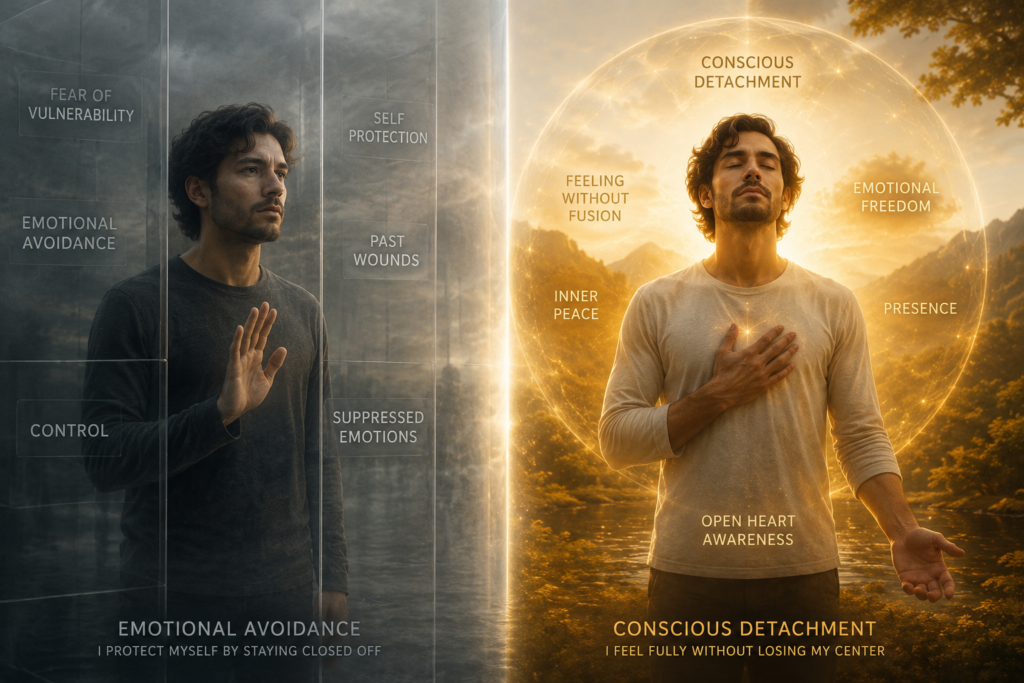
The Uncomfortable Truth About Detachment:
Why “Being Detached” Is Often Emotional Avoidance
By Varshha Sangal
Detachment is one of the most praised qualities in spirituality. It is spoken about with reverence, quoted from scriptures, and often presented as the highest form of wisdom. People are told that if they are detached, they will not suffer. That if they stop caring, nothing will hurt them. That detachment is freedom.
And yet, I meet countless people who call themselves detached but feel deeply lonely, disconnected, numb, or emotionally closed. They are calm on the surface, but empty underneath. They are not reactive, but they are also not alive. Their spirituality looks peaceful, but their inner world feels distant and cold.
This is where an uncomfortable question needs to be asked:
Is this detachment, or is it emotional avoidance disguised as spirituality?
Table of Contents
How Detachment Slowly Lost Its True Meaning
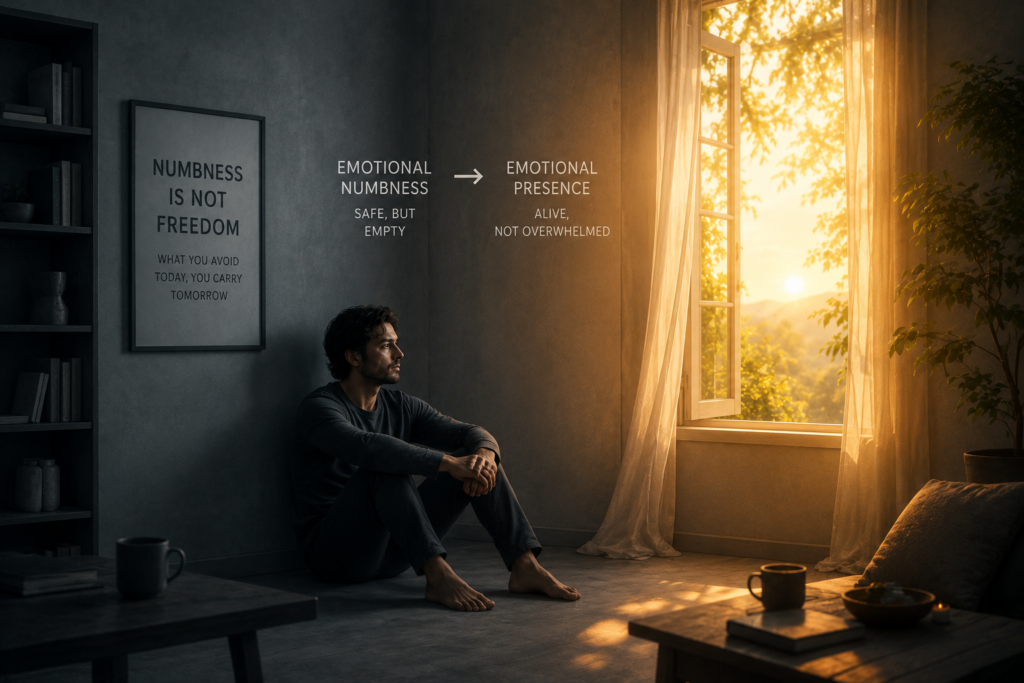
In its true sense, detachment was never about shutting down emotions. It was about not being controlled by them. But somewhere along the way, detachment became confused with withdrawal.
People learned that feeling deeply was dangerous. That attachment leads to pain. That expectations create suffering. So instead of learning how to stay present with emotions, they learned how to disconnect from them.
This disconnection was labelled maturity. Silence was labelled wisdom. Emotional distance was labelled enlightenment.
But suppression is not transcendence.
What People Are Actually Searching When They Search About Detachment

When people feel confused about detachment, they often search things like:
“Why do I feel empty after becoming detached?”
“Is detachment making me cold?”
“How to be detached without feeling numb?”
“Why do I feel lonely after spiritual growth?”
These questions are rarely answered honestly, because questioning detachment feels like questioning spirituality itself. But detachment that kills aliveness is not spiritual growth—it is self-protection.
The Difference Between Detachment and Disconnection

True detachment is spacious. It allows feeling without drowning. It allows love without possession. It allows pain without identity collapse.
Disconnection, on the other hand, is tight. It avoids feeling. It avoids vulnerability. It avoids intimacy. It feels controlled, guarded, and often proud of not needing anyone.
Many people don’t realise when they crossed from detachment into disconnection. It usually happens after hurt, betrayal, loss, or repeated disappointment. Instead of healing the pain, the system decides it is safer not to feel.
Spiritual language then gives this decision a higher meaning.
Why Emotional Avoidance Feels “Peaceful” at First
Emotional avoidance often feels like relief in the beginning. When you stop feeling, the pain reduces. When you stop expecting, disappointment decreases. When you stop caring, anxiety drops.
This temporary relief is often mistaken for peace.
But over time, something else happens. Joy reduces along with pain. Connection fades along with attachment. Relationships become shallow. Life feels flat.
People then say, “I don’t get affected anymore,” but what they really mean is, “I don’t feel deeply anymore.”
That is not freedom. That is numbness with spiritual justification.
Why This Pattern Is So Common in Spiritual Spaces
Spiritual environments often reward emotional restraint. People who are expressive are seen as ungrounded. People who are sensitive are told to be detached. Pain is often dismissed as attachment.
So people learn to hide emotional needs behind spiritual concepts. They stop asking for support. They stop expressing hurt. They stop admitting longing.
Over time, this creates a subtle superiority: “I am above emotions.”
But being above emotions is not the same as being free from them.
Emotions don’t disappear when ignored. They go underground.
Bhagwan Was Never Meant to Replace Feeling
One of the quiet distortions in spirituality is using Bhagwan to replace emotional connection. People tell themselves they don’t need people, intimacy, or expression because they have God.
But Bhagwan does not replace humanity. Bhagwan includes it.
If devotion disconnects you from your feelings, it is not devotion—it is avoidance.
True bhakti softens the heart. It does not close it.
How Conscious Healing Brings Back Aliveness Without Attachment
This is where conscious healing, Akashic awareness, and Access Consciousness gently challenge the misuse of detachment.
They do not ask people to become emotionally dependent. They help people become emotionally present.
When emotional safety is restored:
- Feelings arise without overwhelming
- Boundaries form without shutting down
- Love flows without fear
- Detachment becomes natural, not forced
People often realise they don’t need to “practice” detachment anymore. It emerges on its own, because fear is no longer running the system.
Why Many People Fear Letting Go of Detachment
Detachment often feels like armour. Letting it go feels risky. People worry that if they open emotionally, they will suffer again.
This fear is understandable. But detachment did not protect them—it only postponed healing.
Awareness teaches something different: you can feel deeply without losing yourself.
That is real freedom.
The Silent Cost of Misunderstood Detachment
The cost of emotional avoidance is not always dramatic. It is quiet. It shows up as:
- Lack of joy
- Difficulty with intimacy
- Shallow relationships
- Feeling “fine” but not fulfilled
- Spiritual pride mixed with loneliness
Many people accept this state because it looks spiritual. But spirituality was never meant to flatten life.
A More Honest Understanding of Freedom
Freedom is not absence of feeling.
Freedom is presence without fear.
Detachment is not withdrawal.
Detachment is clarity without clinging.
If your spirituality has made you less alive, less expressive, or less connected, it may be time to question the version of detachment you were taught.
A Closing Reflection
If you have been calling numbness detachment, please don’t judge yourself. You were protecting yourself the best way you knew.
But know this now: you don’t have to disappear to be spiritual.
Bhagwan does not ask you to shut down. Bhagwan invites you to be fully present.
If this reflection resonates and you feel drawn to explore spirituality that allows feeling without fear, you can learn more about my work at:
Not to pull you back into attachment—
but to bring you back into life.